
Updated
Drywall Repair in Youngstown, OH
New Page Reno LLC fixes holes, cracks, nail pops, water damage, and old plaster in homes and rentals across Youngstown, Boardman, Austintown, Canfield, and Poland. Then we match the texture, prime, and paint so the repair disappears. Free written estimates, usually within 24 hours of the walkthrough.
- Fully insured
- Drywall and plaster
- Texture matched and painted
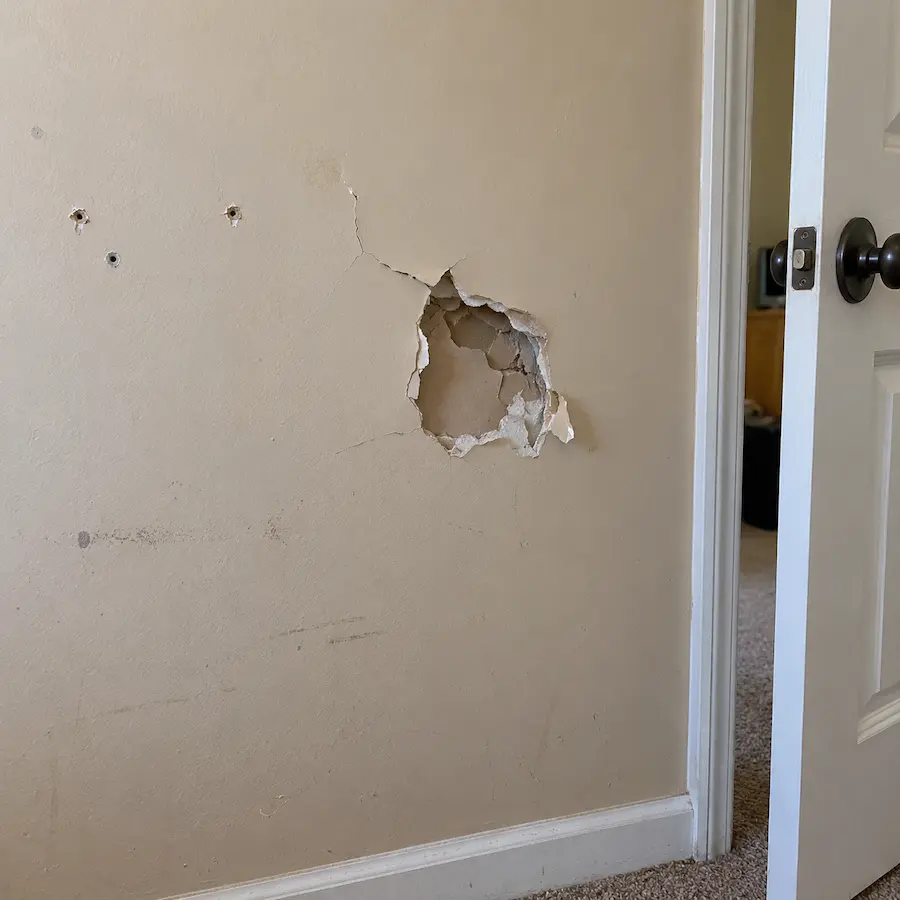
Doorknob and impact holes
1–2 days- Likely cause
- A missing door stop, a swung chair, or moving day. It's one of the most common kinds of damage in rentals.
- How we fix it
- Small holes get a mesh or butterfly patch; bigger ones are cut square and patched with wood backing behind them. Then texture, primer, and paint.
- Typical timeline
- Most repairs take 1–2 days, because compound needs drying time between coats
- Every repair includes
- Patch, tape, texture match, primer, and paint to blend
- Walls we fix
- Drywall, original plaster and lath, and ceilings
- Service area
- Mahoning, Trumbull, and Columbiana counties, based in Canfield, OH
Drywall hole repair, by size
The size of the hole decides the repair. Anything under half an inch is filled; holes up to about 6 inches get a patch; anything bigger is cut out and rebuilt with new drywall screwed to backing or framing.
-
Under ½"
Nail holes and dings
Filled with lightweight spackle, sanded flush, and spot-primed.
Same visit -
½" to 2"
Small holes
Setting compound, with a mesh patch at the larger end, in two or three thin coats.
Same day to 1 day -
2" to 6"
Medium holes
A mesh or butterfly patch, feathered out wide so it doesn't leave a bump.
1–2 days -
6" to about 16"
Large holes
Cut square, wood backing added, new drywall screwed in, then taped and finished.
1–2 days -
Larger or water-damaged
Whole sections
Cut back to the studs, a new section or full sheet hung, then taped, textured, and finished.
2–3 days
Every size is primed and painted to match. On flat and eggshell walls, a small painted patch usually shows as a shiny spot, so we plan to repaint the wall corner to corner.
Drywall cracks and damage we repair in Valley homes
A patch only lasts if the cause is handled too. Here's what's usually behind each problem in Mahoning Valley homes, and how we fix it so it stays fixed.
Doorknob and impact holes
Why it happens: A missing door stop, a swung chair, or moving day. It's one of the most common kinds of damage in rentals.
How we fix it: Small holes get a mesh or butterfly patch; bigger ones are cut square and patched with wood backing behind them. Then texture, primer, and paint.
Cracks above doors and windows
Why it happens: The corners of openings are where a house's seasonal movement concentrates. Dry, heated winters and humid summers make framing shrink and swell, and older Valley homes that have settled for decades crack here first.
How we fix it: We open the crack, embed mesh or paper tape in setting compound, and feather it out in thin coats. Caulk or spackle alone just lets the crack come back.
Ceiling cracks that show up every winter
Why it happens: In homes with roof trusses, the trusses can bow upward in cold weather and pull the ceiling away from interior walls. It's called truss uplift, and it's common in homes built from the 1960s on.
How we fix it: Re-taping won't hold while the ceiling keeps moving. We release the ceiling edge from the wall where needed, or use a flexible corner or trim detail so the seasonal movement stays hidden.
Nail and screw pops
Why it happens: Wood framing shrinks as it dries out, especially through forced-air heated Ohio winters, and pushes fasteners back out through the finish.
How we fix it: We drive a new screw beside each pop, set or remove the old fastener, then fill, sand, and spot-prime so it doesn't return.
Peeling or bubbling seam tape
Why it happens: Tape bedded in too little compound, or seams exposed to steam from bathrooms and damp basements, loses its bond and lifts.
How we fix it: We cut out the loose tape, bed new tape in fresh compound, and skim the seam so it disappears under paint.
TV mount and anchor holes
Why it happens: Removed mounts, shelves, and plastic anchors leave clustered holes and torn face paper, especially at move-out.
How we fix it: We pull the anchors and seal torn paper with a shellac-based primer so it won't bubble under compound, then fill, sand, and prime.
Water-stained or sagging drywall
Why it happens: Ice dams, upstairs bathroom leaks, and roof or plumbing leaks soak drywall from behind. Stains bleed back through regular paint.
How we fix it: Once the leak is fixed and the area is dry, stains get a stain-blocking primer. Soft, sagging, or crumbling drywall gets cut out and replaced.
Dented or cracked corner bead
Why it happens: Outside corners take hits from furniture, vacuums, and move-ins. Once the metal bead bends, the compound over it cracks off.
How we fix it: We cut out the damaged section, install new corner bead, and float it straight with the rest of the corner.
Plaster wall repair for older Youngstown homes
A large share of Youngstown's homes were built before 1960, when plaster over wood lath was standard. Plaster is harder than drywall and moves differently, so it needs setting-type compound and mesh tape, not regular drywall mud, or the crack comes back.
There are four ways to fix it. We'll recommend the least invasive one that will actually hold.
Re-secure and patch
- Best for
- Loose plaster, isolated cracks, and holes
- How it's done
- Plaster washers or adhesive pull the plaster back to the lath, then setting compound and mesh tape
- Tradeoff
- Keeps your original walls and trim untouched
Skim coat
- Best for
- Walls covered in hairline cracks or rough old patches
- How it's done
- Cracks repaired first, then thin coats of compound over the whole wall
- Tradeoff
- Smooth as new, but more labor than spot repairs
Drywall overlay
- Best for
- Heavily cracked plaster that is still solidly attached
- How it's done
- ¼" drywall screwed over the plaster, then taped and finished
- Tradeoff
- A brand-new surface with little dust; outlets and trim may need extenders
Tear out and replace
- Best for
- Water-damaged, crumbling, or detached plaster
- How it's done
- Plaster and lath removed, new drywall hung and finished
- Tradeoff
- The most dust, disruption, and cost, so we save it for when nothing else will last
Built before 1978? Painted plaster in older homes may contain lead paint, and federal EPA rules require lead-safe practices when it's sanded, cut, or demolished. Tell us the year your home was built when you request an estimate so the job is planned for it.
Water-damaged drywall: repair or replace?
Water-stained drywall that is dry and firm can be sealed with a stain-blocking primer and painted. Drywall that is soft, sagging, or crumbling has to be cut out and replaced. If it's still wet or moldy, the source has to be fixed first.
In the Mahoning Valley, water damage most often traces back to ice dams on exterior walls, leaks from upstairs bathrooms, and damp basements.
Stained, but dry and firm
A stain-blocking primer locks the stain in, then the ceiling or wall is painted to match. Regular paint won't hide water stains; they bleed back through within days.
Soft, sagging, swollen, or crumbling
We cut back to solid drywall and framing, replace the section, and tape, texture, prime, and paint it to blend with the rest of the room.
Still wet, leaking, or moldy
A roofer or plumber needs to stop the leak before any drywall goes back up. EPA guidance recommends a professional for mold patches larger than about 10 square feet. Once it's dry and clean, we rebuild.
Drywall texture matching
A patch disappears only when its texture matches the wall around it. Most Valley homes have one of these five finishes, and each one is matched differently.
Smooth
Most common in Valley homes. Matched by feathering compound wide and sanding flat so no edge catches the light.
Orange peel
A fine, bumpy spray finish. Matched by spraying thinned compound at the right pressure and distance.
Knockdown
Sprayed splatter that's flattened with a knife. Matched by timing the knockdown to the existing pattern.
Skip trowel
A hand-troweled, mottled look. Matched by hand with a trowel, not a sprayer.
Popcorn ceiling
Acoustic texture on older ceilings. Popcorn installed before the mid-1980s can contain asbestos, so it's tested before it's scraped or patched.
How we repair drywall so it stays fixed
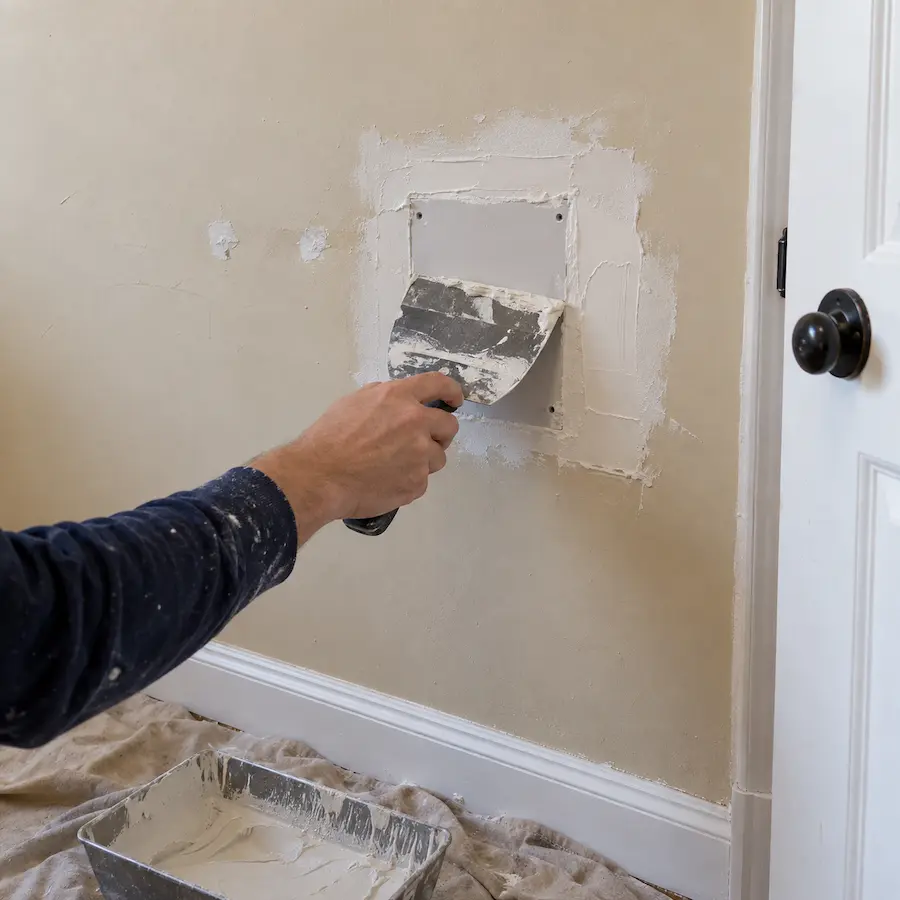
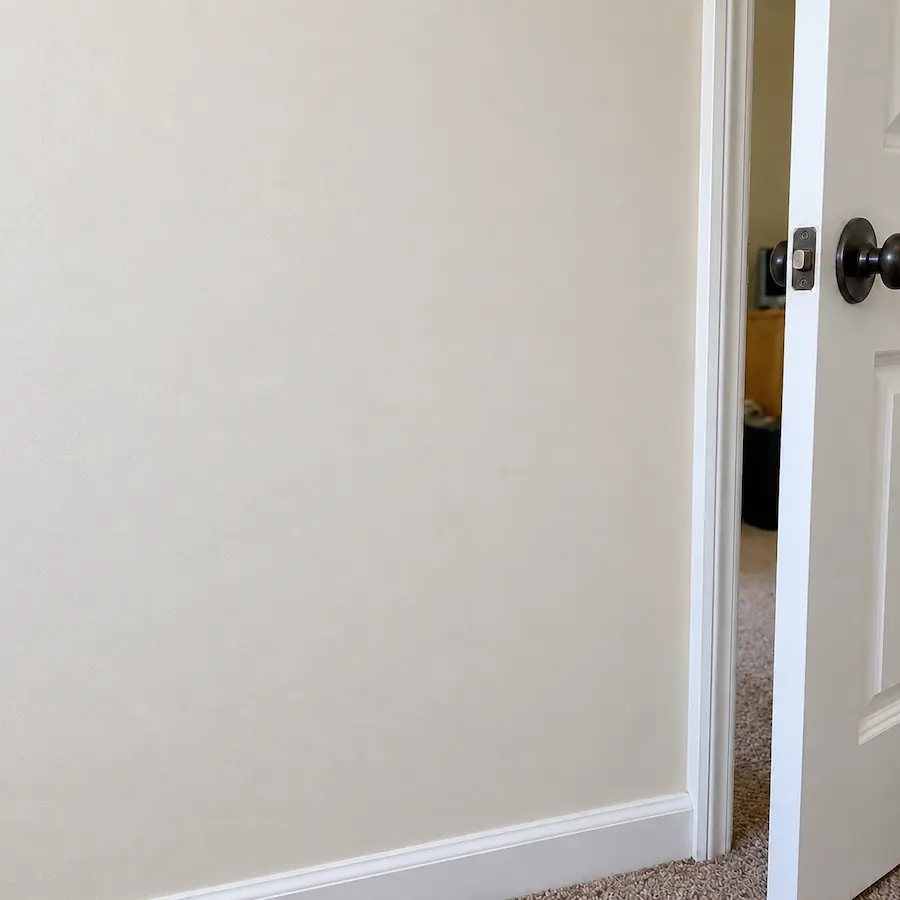
What a drywall repair looks like from start to finish, and the five steps behind every patch, whether it's one doorknob hole or a whole ceiling.
-
Find the cause
A leak, a missing door stop, or framing movement. Fix the why first, or the same damage comes back.
-
Cut back to solid
Crumbled edges, torn paper, and wet drywall are cut out so the patch has something solid to bond to.
-
Patch, tape, and coat
New drywall or mesh, tape bedded in compound, then two or three thin coats with drying time between them.
-
Sand and match texture
Feathered wide so the patch doesn't bulge, then textured to match the wall around it.
-
Prime and paint to blend
Primer seals the patch so it doesn't show through, then finish paint, usually corner to corner.
What drywall repair costs in Youngstown, OH
Most small drywall repairs in the Youngstown area cost $150–$300 per visit, and a single larger hole typically runs $250–$500 including texture, primer, and paint. Water damage, plaster, and ceiling work cost more because of the extra tear-out and finishing.
| Repair | Typical range | Typical time |
|---|---|---|
| Nail pops and small holes, one visit | $150–$300 | Often same visit |
| Doorknob or medium hole (2"–6") | $175–$350 | 1–2 days |
| Large hole with backing (6"–16") | $250–$500 | 1–2 days |
| Cracks above doors or windows, per room | $250–$550 | 1–2 days |
| Plaster crack repair and skim, per wall | $400–$900 | 2–3 days |
| Water-damaged ceiling section, replaced | $450–$1,200 | 2–3 days |
| Rental move-out patch-up, per unit | $300–$900 | 1–2 days |
Bundle your repairs
Setup, drying time, and return trips cost the same whether it's one hole or ten. List every ding in the house and fix them in one visit.
Budget for paint
Touch-up paint rarely blends on an older wall. Plan on repainting the whole wall, and ask us to price the room if it's due anyway.
Ranges are for planning only and aren't a quote. Your free written estimate is the real number. Painting the whole room at the same time? See interior and exterior painting.
Drywall repair across the Mahoning Valley
Based in Canfield, we repair drywall and plaster for homeowners, landlords, and property managers in three counties. Don't see your town? Call (330) 727-8761.
Mahoning County
- Youngstown
- Boardman
- Austintown
- Canfield
- Poland
- Struthers
- Campbell
- North Lima
Trumbull County
- Warren
- Niles
- Howland
- Hubbard
- Liberty
- Girard
- Cortland
Columbiana County
- Salem
- Columbiana
- Leetonia
- Lisbon
Drywall repair questions from Valley homeowners
Straight answers to what people ask before they hire someone to fix a wall.
How much does drywall repair cost in Youngstown, OH?
How long does drywall repair take?
Can you match my wall or ceiling texture?
Will I be able to see the patch after it's painted?
Do you repair plaster walls or only drywall?
Should water-damaged drywall be repaired or replaced?
What causes nail pops, and will they come back?
Why do cracks keep coming back above my doors and windows?
Do you fix tenant damage between renters?
Do you paint after repairing the drywall?
Get a free drywall repair estimate
Tell us what's damaged and where. We'll set up a walkthrough and send an itemized, no-pressure quote, usually within 24 hours.
Speed up your quote
- Snap a photo of each damaged spot with a tape measure or coin beside it for scale.
- Take one wider shot of the room so the texture and paint color show.
- If it's water damage, note whether the leak has been fixed.